What’s the origin of the phrase ‘Nine days’ wonder’?
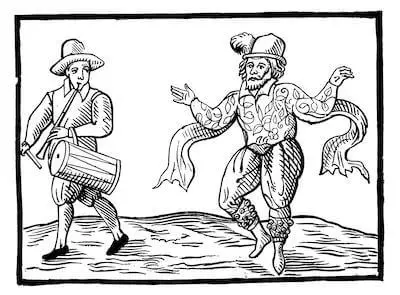
In 1600, William Kemp, an Elizabethan clown actor, who is thought to have been the original Dogberry in Shakespeare’s Much Ado About Nothing, 1599, danced a morris dance between London and Norwich. He took up the challenge for a bet and covered the distance of a hundred miles or more in nine days (spread over a few weeks). Some doubted that he had achieved this and, to quell dissent, he wrote ‘Kemps nine daies vvonder’, published in 1600:
“Wherein euery dayes iourney is pleasantly set downe, to satisfie his friends the truth, against all lying Ballad-makers; what he did, how hee was welcome, and by whome entertained.”
There is little doubt that the event did take place. The ample evidence to support it includes the 17th century records of the Norwich Town Council, which lists the payment of his prize money.
So, we have a well-authenticated historical event called ‘Kemp’s Nine Days’ Wonder’, dating back to 1600. That might be thought to be enough to establish Kemp as the source of the phrase.
Actually, he wasn’t. The phrase dates from well before the 17th century. As well as the date, there’s the meaning of the phrase, which isn’t ‘something wonderful that took nine days to achieve’, but ‘something which becomes boring after nine days’.
The earliest citation, in Old English, is in the ‘Harley Lyrics’, circa 1325. The earliest record in print that most people today would be able to decipher is in ‘Poems written in English during his captivity in England, after the battle of Agincourt’ by Charles, Duke of Orleans, 1465:
“For this a wondir last but dayes nyne, An oold proverbe is seid.”
The first record in print of the phrase as we now use it is from George Herbert’s poem The Temple, 1633:
The brags of life are but a nine days wonder;
And after death the fumes that spring
From private bodies make as big a thunder,
As those which rise for a huge King.
In more recent years, more than one rock band has adopted the phrase as a self-deprecatory name. That’s more likely as an allusion to another phrase with a related meaning - one hit wonder, than it is a homage to the dancing Kemp. Some of them have lasted several years.