Home
Home  Search

Half-hearted
What's the meaning of the phrase 'Half-hearted'?
Having one's intentions divided; not fully committed; lacking zeal or courage.
What's the origin of the phrase 'Half-hearted'?
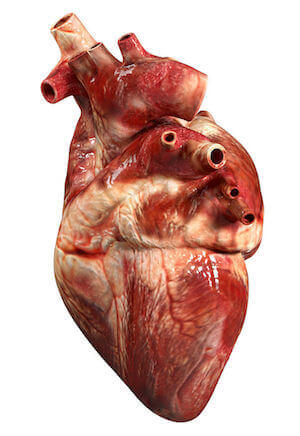 It might be thought that 'half-hearted' is a diminutive form of the more commonly used term 'whole-hearted'. In fact, it is the other way about. Both are of English origin. 'Whole-hearted' first saw the light of day in the 19th century, while 'half-hearted' is medieval. 'Half-hearted' is a derivative of the slightly earlier 'faint-hearted'.
The metaphorical concept of 'heart' is at the root of faint-hearted and half-hearted. To the medieval way of thinking, the heart was the source of a person's being and the belief of the time was that the physical state of one's heart controlled one's demeanour. The later term 'whole-hearted' refers to a later meaning of 'heart', which was 'courage; manliness'.
The earliest examples of these phrases that I have found are:
- Faint-hearted: In the first English-Latin dictionary The Promptorium Parvulorum, circa 1440:
"Feynt hertyd, vecors".- Half-hearted: In John Florio's Italian-English dictionary Queen Anna's New World of Words, 1611:
"Semicorde, a coward, halfe-hearted".- Whole-hearted: In Golden Scepter, John Preston, circa 1628 :
"A man that is still whole hearted ever since hee was borne, and never affrighted with sinne and wrath".
See also: the meaning and origin of 'hard-hearted'.