Home
Home  Search

Cockney Rhyming Slang
What is Cockney Rhyming Slang?
A type of slang in which words are replaced by words or phrases they rhyme with.
How and where did Cockney Rhyming Slang originate?
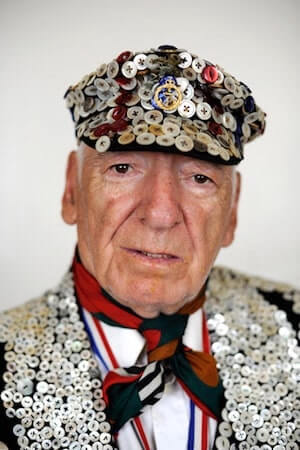 Rhyming slang has the effect of obscuring the meaning of what is said from outsiders. It isn't clear whether this is intentional, to hide one's meaning from the law, or to exclude outsiders, or whether it is just a form of group bonding.
The way rhyming slang works does tend to exclude those not 'in the know', as the substitution of one word for another often relies on reference to a key phrase, which, for the slang to be understood, must be known jointly by those communicating; for example, to get from 'Hamsteads' to 'teeth', one must have heard of Hampstead Heath.
There's no reason to suppose that there was any great conspiracy in the formation of rhyming slang. English speakers, in common with speakers of other languages, enjoy rhyming. Evidence of this are the numerous double-word forms (reduplications), created from nonsense words and coined for no better reason than for the hell of it; for example, 'hoity-toity', higgledy-piggledy', 'namby-pamby', 'nitty-gritty', 'itsy-bitsy', etc, etc.
Rhyming slang is an exuberant linguistic form and tends to flourish in confident, outgoing communities. That's certainly true of Victorian England, which is where it originated. The earliest example of rhyming slang that we can find is in the English writer Edward Jerringham Wakefield's, Adventures in New Zealand, 1845, in which he includes an account of the journey from the UK to the Southern Hemisphere:
"The profound contempt which the whaler expresses for the 'lubber of a jimmy-grant', as he calls the emigrant."
Who Jimmy Grant was isn't clear.
The first to record rhyming slang in any systematic way were:
Ducange Anglicus, in The Vulgar Tongue: A Glossary of Slang, Cant, and Flash Words and Phrases: Used in London from 1839 to 1859 , 1857
John Camden Hotten, in A Dictionary of Modern Slang, Cant and Vulgar Words, 1859
Anglicus includes these examples, all dated 1857:
Apple and Pears, stairs.
Barnet-Fair, hair.
Bird-lime, time.
Lath-and-plaster, master.
Oats and chaff, footpath.
Hotten's book includes:
Bull and cow, a row.
Chevy Chase, the face.
There may have been many examples for dictionary makers to record by the 1850s but, like most slang, these were street level terms and not in general usage. Charles Dickens wrote an article on slang in 'Household Words' in 1853 and made no reference to rhyming slang.
Hotten was the first to apply the name 'rhyming slang' to the form, in his 1859 dictionary:
"The cant, which has nothing to do with that spoken by the costermongers, is known in Seven Dials and elsewhere as the Rhyming Slang, or the substitution of words and sentences which rhyme with other words intended to be kept secret. I learn that the rhyming slang was introduced about twelve or fifteen years ago."
The slang form wasn't known in the USA until late in the 19th century. Here's an item from the Lima Times Democrat, Sept 1894, which is the earliest reference I can find from America. It's in an editorial piece titled 'The Slang of London', which describes rhyming slang at length and is clearly intended for an audience who are new to it:
"Rhyming slang is peculiar to England and, I believe, to London."
 So far, we haven't mentioned 'Cockney', nor you might notice do any of the early citations above. That's because, although rhyming slang was associated with London, and particularly with London street traders, there never has been anything specifically Cockney about it. Rhyming slang didn't become Cockney Rhyming Slang until long after many of its examples had travelled world-wide. Cockney, according to the strict definition, refers to those born within the sound of Bow Bells. Cockney Rhyming Slang is just shorthand for London or English rhyming slang. As a name, 'Cockney Rhyming Slang' is 20th century, as are the majority of examples of CRS terms.
Just as an aside, here's some alternative versions of the supposed derivation of the name Cockney, as given in the 1811 Classical Dictionary of the Vulgar Tongue, Author: Captain Grose et al. Believe it if you will:
Cockney:
A nick name given to the citizens of London, or persons born within the sound of Bow bell, derived from the following story: A citizen of London, being in the country, and hearing a horse neigh, exclaimed, Lord! how that horse laughs! A by-stander telling him that noise was called NEIGHING, the next morning, when the cock crowed, the citizen to shew he had not forgot what was told him, cried out, Do you hear how the COCK NEIGHS?
Rhyming slang has spread to many English-speaking countries, especially those that had strong maritime links with the UK in the 19th century, notably Australia, Ireland and Canada/USA. There's even less justification for the name these days than there was when it was coined. Many examples of CRS clearly originate in other countries, although England, and specifically London, is still the major source. The spread can be shown by phrases that relate to people or places only well-known in a particular country, or ones where the rhyme depends on a regional or national accent; for example:
Australia:
Reg Grundies = Undies (Grundy is an Australian businessman)
Steak and kidney = Sydney
Ireland:
Flowers and frolics = bollocks (nonsense) or, with an Irish accent, bollicks.
Scotland:
Corned (beef) = deaf or, in Scotland, deif.
USA:
Eighty-six = nothing (nix).
Lest we forget London, there are several examples that rely on vowel pronunciation or place names of south-east England. E.g.:
Khyber pass = a*** (elsewhere in England this would rhyme with ass)
Hamsteads = Hampstead Heath = teeth
Hampton = Hampton Wick = dick/prick
Rhyming slang is highly volatile; terms emerge quickly and many don't catch on. That's especially true recently with the rise of media/celebrity culture and the Internet. There are many lists of CRS terms. Here's a short list of those that are fairly well-established and likely to remain in the language.
Many of the early rhymes listed in Hotten and Anglicus have now gone out of use; for example, 'Billy Button - mutton' and Maidstone jailer - tailor'. The list below includes examples that are still in use.
There has been an annual horse fair in the London district of Barnet since 1588.
Not seen in print with Sun newspaper meaning until the 1979. The Sun began publishing in 1964.
Other meanings, now rarely used, have been 'nun' (from Scotland in 1966), 'the sun' (from 1938). 'On the currant bun' was police slang for 'on the run' from 1959.
By 1859, in Hotten's A Dictionary of Modern Slang, Cant and Vulgar Words.
1964
1887. Hampstead Heath is a large public open space in North London.
Both Hotten and Anglicus record this rhyme as Hounslow Heath, which has fallen out of favour.
There have been numerous famous people called Jack Jones and it isn't clear which one this refers to, although the expression is known since 1925, as sailor's jargon.
Alternative rhymes are Pat Malone (from 1908) and Tod Sloane (from 1956) - the latter being the source of 'on your tod'.
1943
1925, as sailor's jargon.
By 1857, in Anglicus' The Vulgar Tongue: A Glossary of Slang, Cant, and Flash Words and Phrases: Used in London from 1839 to 1859.
Note that, in Anglicus' day mince pies would have been savoury pies made of minced meat, rather than the sweet pies we eat today.
1960.
Mutt and Jeff were the lead characters in a strip cartoon, first published in 1907.
1859, in Hotten's A Dictionary of Modern Slang, Cant and Vulgar Words.
1987. Pete Tong is an English DJ who was born in 1960.
The date is uncertain.
Potatoes can be stored by heaping straw and earth over them in a domed construction known as a mould. These are rarely used since cold stores have been available and the expression probably dates from the Victorian era or earlier.
1941
1902, in Henley's Slang dictionary.
1901. In 1857 Hotten records this as 'River Lea'. The Lea is a river in East London, well-known to Cockneys.
First found in a 1983 episode of John Sullivan's Only Fools and Horses. Ruby Murray was a UK singer, popular in the 1950 and 60s.
The first uses of scarper are from the 1840s. It is likely that these early uses weren't rhyming slang and derive from the Italian 'scappare', meaning 'get away'.
Scapa Flow is a body of water off the north coast of Scotland. It is likely that the link to 'scarper' is a back-formation made when Scapa Flow became well-known as the location of battles in WWI.
The earliest use isn't known but is probably early 20th century.
Sexton Blake is a fictional detective featured in UK comic strips from 1893 onward.
The Sweeney was the name given to the London police's Flying Squad in the 1970s TV series of the same name.
1981. Syrup of figs is an over the counter laxative medicine which used to be widely used in the UK. These days the rhyming slang term is more used than the medicine.
1903
1925, as military slang.
1908. 'Trouble and strife' was also used as a rhyme for 'life' although this usage has died out.
1908. There may be a connection between this rhyme and the song pop goes the weasel.
1931. Weasel and whistle sound similar and mean similar things so it is possible that the adoption of one was influenced by the other.